Why Ecommerce Mistakes Are More Costly in 2026
Ecommerce margins are under pressure. Customer acquisition costs are going up, paid media is becoming harder and more expensive to win, and customers have less patience for moments of friction. Meanwhile, in the digitally sophisticated, mobile-first Dallas market, the pressure is amplified. A slow site with a confusing checkout and outdated UX is no longer a minor inconvenience; it leads to immediate abandonment. In fact, studies consistently show that even a one-second delay in page load time can significantly reduce conversion rates, especially for mobile users. Consequently, these ecommerce mistakes can negatively affect your revenue, operational efficiency, and the perceived trustworthiness of your brand over time. Businesses that don’t solve for them face difficulty scaling, in spite of demand.Ecommerce Mistake #1: Poor Ecommerce UX and Design Decisions
Bad ecommerce UX continues to be one of the most prevalent and harmful mistakes in ecommerce design. Unfortunately, many online shops continue to favour form over function, with cluttered layouts, confusing navigation, and unclear purchase funnels. In 2026, customers expect simplicity. If not, people can’t easily find products, compare options, or comprehend value, and they walk. Mobile UI is another major challenge for ecommerce businesses. Specifically, treating mobile experiences as a simplified version of desktop often leads to poor ecommerce UX and lost conversions, quite simply, because these days most ecommerce traffic comes from smartphones. Moreover, it’s a lot about trust, too. Irregular branding, vague policies, poor product images, or missing trust signals can confuse at crucial buying times. In many cases, there can be a technically good store that does not perform well because it is not trusted or believed in.Ecommerce Mistake #2: Ignoring Website Speed and Performance Optimization
Slow websites are no longer just a technical problem; they are a direct revenue issue. As a result, online store performance problems, such as long page load times, delayed interactions, and inefficient checkout flows, lead to significantly higher bounce rates and lost sales. In many cases, slow ecommerce websites are caused by unoptimized images, bloated code, outdated frameworks, or poor server infrastructure. Many companies overlook these issues, especially when stores appear functional during initial development, particularly if the stores do seem operational when first presented during construction. Additionally, an additional frequent challenge is the lack of performance testing and monitoring. Without organized testing and continual optimization, performance slips as features and products, and integrations are added. In competitive markets like Dallas, even short delays can prod customers towards a faster alternative.Ecommerce Mistake #3: Failing to Address Ecommerce Conversion Issues
Traffic alone does not generate revenue; conversions do. However, ecommerce store conversion problems usually occur when companies concentrate too much on acquisition and ignore the importance of conversions. One significant issue is a cumbersome checkout process. Too many steps, account creation by force, or restrictive payment options create impediments in the purchase journey. Therefore, there is no use having an over-exposed abandoned cart strategy and trumpeting to customers who are just ready to buy, but drop the cart because of unnecessary complexity. Another problem is poor value communication. Confusing or ambiguous calls to action, indistinct product descriptions, or a lack of benefits keep the customers in the dark. Without data-proven ecommerce conversion optimization tips, companies are left guessing instead of knowing. Ultimately, the most successful ecommerce brands treat conversion optimization as something that needs to be visited continuously and not a one-off fix.Ecommerce Mistake #4: Poor Ecommerce Platform and Technology Choices
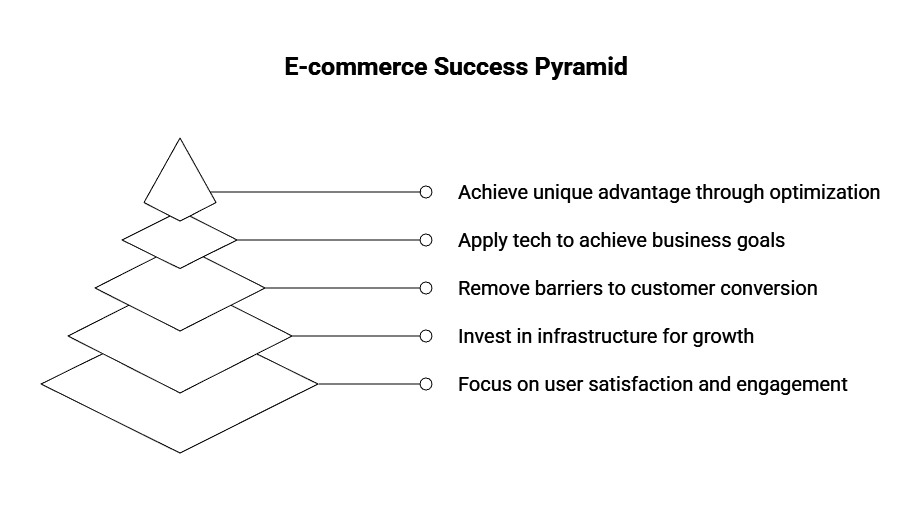
Opting for the wrong e-commerce platform is a strategic blunder that can inhibit growth for years. Too often, businesses choose platforms by only factoring in upfront cost or ease of implementation and don’t take into account long-term growth potential, customizability, or integration needs. As businesses expand, constraints emerge. Platforms that cannot handle high traffic volumes, complex functionality, or custom workflows often lead to costly migrations later. Additionally, integrations with inventory systems, CRM software, and accounting solutions are also sub-par and create operational inefficiencies. Therefore, technology choices should map to the future, not just current needs. An adaptive scaling architecture is behind the moves in 2026 to establish a profitable ecommerce.Ecommerce Mistake #5: Treating Ecommerce as a Website Instead of a Business System
A common but mistaken approach in ecommerce is to think of your store as an independent website, and not a business system that’s tied into the heart of your operations. Ecommerce sales, operations, customer service, marketing, and reporting are all affected. When this happens, ecommerce is disjointed from the broader business, and inefficiencies abound. Manual order entry, lack of automation, and siloed systems create operational drag and unnecessary costs. At the same time, businesses also fail to take advantage of digital tools that will help them make better decisions. By contrast, the year is 2026, and leading ecommerce properties operate as tightly-integrated systems, focused on using technology to drive revenue growth and operational efficiency.Ecommerce Mistake #6: Underestimating Security, Compliance, and QA Testing
The way ecommerce scripts work is that if you sell a product or service, then you are collecting personal data such as names and addresses. Because of this, security and trustworthiness are a given nowadays in ecommerce. Consumers want to know that their information is safe and transactions are stress-free. Otherwise, both trust and brand reputation can be undermined by the slightest loss of security. Equally important, testing and controlling quality is just as important. When organizations bypass QA in order to accelerate launches, it produces broken checkout flows, pricing errors, or mobile problems that harm revenue. Even if unnoticed internally, one wonk might escape your own attention, but they are the very thing a customer will notice instantly. Furthermore, compliance is also more important than ever. Accessibility and privacy regulations and ever-changing payment encryption requirements are just a few examples. If ignored, businesses that don’t do so will face legal trouble and lose trust.Ecommerce Mistake #7: Lack of a Long-Term Ecommerce Optimization Strategy
Ecommerce is not something that you set up, forget about it, and see the business flourish. In fact, not having a long-term optimization strategy is one of the most expensive e-commerce mistakes that enterprises make. Customer habits shift, technology advances, and competitors adjust. Over time, eCommerce platforms degrade gradually because there are no ongoing UX enhancements, performance optimization, or conversion rate testing. Analytics can lead to missed opportunities to learn about their customer journeys and their purchasing behavior. Ecommerce growth is not a set-it-and-forget-it process. It requires ongoing optimization driven by both technical expertise and business insight. Also read: How Mobile Apps Are Boosting Business Growth in Chicago in 2026Ecommerce Optimization Tips for Dallas Businesses in 2026